Diamonds
Lab-Grown vs Natural Diamonds in UAE | ZIYO Guide
Updated 1 November 2026
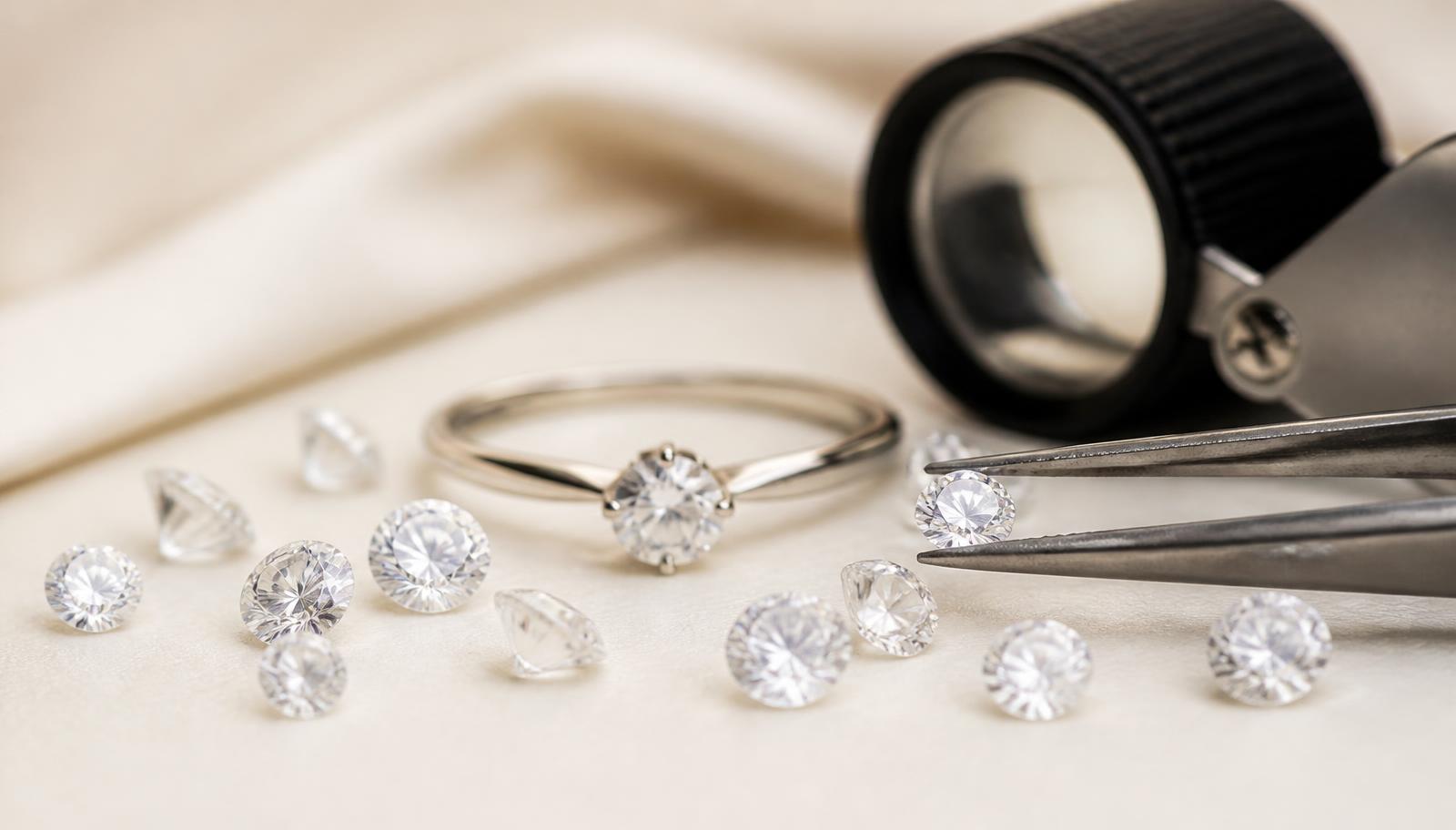
The choice between natural and lab-grown diamonds is one of the most frequent conversations among fine jewellery buyers in the UAE. For decades, the gold souks of Dubai and Abu Dhabi established a retail culture centred on natural mined gemstones and investment-grade bullion. Today, technological advancement and shifting consumer tastes have introduced high-clarity lab-grown diamonds into the regional market. Deciding between the two requires a clear understanding of their physical properties, certification benchmarks, long-term trade reality, and the specific cost structures governing jewellery purchases in the Emirates.
Chemical Composition and Physical Performance in the UAE Climate
From a scientific standpoint, a lab-grown diamond is chemically, physically, and optically identical to a diamond mined from the earth. Both stones are formed entirely of crystallised carbon arranged in an isometric cubic system. They share an identical refractive index of 2.42 and a score of 10 on the Mohs scale of mineral hardness, making diamond the hardest known mineral on earth.
This material parity is particularly relevant in the Arabian Gulf. The intense heat and high ambient humidity typical of a Dubai summer can degrade softer organic gems or cause low-grade alloys to tarnish rapidly. Diamonds, whether formed over billions of years in the earth mantle or grown over weeks using Chemical Vapour Deposition (CVD) or High Pressure High Temperature (HPHT) methods, remain entirely unaffected by heat, sweat, or moisture. Neither stone will fade, cloud, or scratch during daily wear.
Because both materials share identical thermal conductivity and visual dispersion, standard diamond testers and jewellers loupes cannot tell them apart. Accurate separation requires specialised spectroscopy laboratory instruments that measure microscopic crystal growth patterns and trace nitrogen levels.
IGI Certification: The Independent Benchmark
When purchasing an igi certified diamond uae buyers must look for accredited verification. At ZIYO, we rely exclusively on the International Gemological Institute (IGI), an independent global authority with extensive grading operations in Dubai. IGI provides impartial assessment reports for both natural and lab-grown stones.
Every certified stone is evaluated across the classic four Cs: carat weight, colour grade, clarity grade, and cut precision. An IGI report documents these metrics without bias. Furthermore, lab-grown stones assessed by IGI undergo microscopic laser inscription on the girdle, clearly marking the stone with its laboratory origin and a unique report number corresponding to the physical certificate. This inscription ensures complete transparency throughout the supply chain and protects the client from ambiguous sourcing.
Cost Transparency: The Numbers in AED
Price remains the most distinct practical difference between natural and laboratory diamonds. Earth-mined diamonds require extensive capital allocation for excavation, sorting, international distribution, and raw stone cutting. Lab-grown diamonds operate on an industrial production model where scaling efficiencies have significantly lowered the baseline cost per carat.
At ZIYO, transparent pricing forms the foundation of our work. Natural diamonds are priced at approximately AED 3,000 per carat, whereas lab-grown diamonds are priced at approximately AED 1,500 per carat. When selecting fine jewellery, these gemstone costs sit alongside precious metal weights, making charges, and local statutory taxes.
Under Dubai Municipality regulations, fine gold jewellery sold in Dubai must bear official DCL hallmarks confirming purity: 585 for 14KT gold and 750 for 18KT gold (with 916 reserved strictly for 22KT pieces). ZIYO charges a standard making fee of AED 100 per gram for gold manufacturing, added to the precious metal weight at current market rates, which clients can track via our live gold rates page. By UAE law, all completed jewellery items are subject to standard 5% VAT at checkout.
Component Cost Comparison for a 1-Carat Solitaire Pendant
To illustrate how these costs interact, consider a delicate 1-carat diamond pendant set in 2.0 grams of solid 18KT gold. For this comparative example, the 18KT gold metal value is calculated at a baseline illustrative rate of AED 220 per gram.
| Pricing Element | 1.00ct Lab-Grown Pendant (AED) | 1.00ct Natural Pendant (AED) |
|---|---|---|
| Diamond Stone Cost | 1,500 | 3,000 |
| 18KT Gold Base (2.0g at AED 220/g) | 440 | 440 |
| Making Charge (AED 100/g) | 200 | 200 |
| Subtotal Before VAT | 2,140 | 3,640 |
| UAE VAT (5%) | 107 | 182 |
| Total Estimated Investment | 2,247 | 3,822 |
As demonstrated, the structural cost of the gold mounting and artisan craft remains identical. The variance rests entirely in the origin of the carbon crystal itself.
Sentimental Value and the Resale Reality in Dubai
A realistic view of diamond acquisition requires confronting the topic of resale value. Historically, Dubai Gold Souk retailers have accommodated buy-backs and trade-ins on natural diamonds, though these transactions regularly incur substantial depreciation against original retail purchase prices due to merchant margins and market fluctuations.
The secondary trade market for lab-grown diamonds in the UAE remains nascent. Because manufacturing capacity worldwide continues to expand, local bullion traders and pawnbrokers currently offer minimal to zero buy-back value for loose lab-grown stones. If your primary objective is purchasing jewellery with the expectation of liquidation across a souk counter in the future, natural diamonds remain the more liquid option.
Conversely, jewellery purchased to mark meaningful milestones, such as an Eid celebration, a graduation, or personal self-gifting, is rarely intended for resale. For daily styling, lab-grown diamonds allow clients to secure a larger carat weight or higher visual clarity within an accessible budget, avoiding compromises on optical brilliance.
Delicate Aesthetics: The Solaire World
ZIYO rejects heavy, ostentatious jewellery that sits unworn inside safe deposit boxes. Modern living across Dubai, from business districts to coastal weekends, calls for fluid, lightweight forms designed for effortless layering. Our Solaire collection features delicate silhouettes cast strictly in 14KT and 18KT solid gold, hosting both natural and lab-grown stones mounted with minimalist prongs and bezel settings.
For clients seeking singular compositions or bespoke adaptations, our workshop develops individual commissions through our custom jewellery service, uniting IGI certified stones with exact DCL-hallmarked metal profiles. Every online purchase includes complimentary, fully insured delivery throughout the Emirates, with flexible checkout options through Tabby and Tamara interest-free instalments.
Frequently Asked Questions
Can a jeweller in Dubai tell the difference between lab-grown and natural diamonds?
A jeweller cannot distinguish between them using a standard microscope or handheld thermal diamond wand. Both varieties display identical thermal response and light dispersion. Positive identification requires laboratory-grade spectroscopic hardware that analyses trace crystal structure and nitrogen lattice configuration.
Do lab-grown diamonds lose their shine in Dubai heat and humidity?
No. Lab-grown diamonds possess a hardness rating of 10 on the Mohs scale, identical to earth-mined stones. They do not fade, scratch, or oxidise under extreme heat, humidity, chlorine, or sea water, retaining their optical brilliance permanently under normal wear conditions.
Is 5% VAT applicable to diamond jewellery in the UAE?
Yes. Under UAE federal tax laws, all finished jewellery items, whether set with lab-grown or natural diamonds, are subject to standard 5% Value Added Tax at point of sale. Only raw investment bullion of 99% purity and above is exempt from local VAT.
Looking for something specific? Explore Solaire gold, Lunaire silver or start a bespoke design.